
The fracture on MRI
A 66-year-old woman fell on her back when a bus braked suddenly. She sustained an acute compression fracture of the second lumbar vertebral body (L2). There was little loss of height and no marked deformity, but moving caused severe lower back pain.
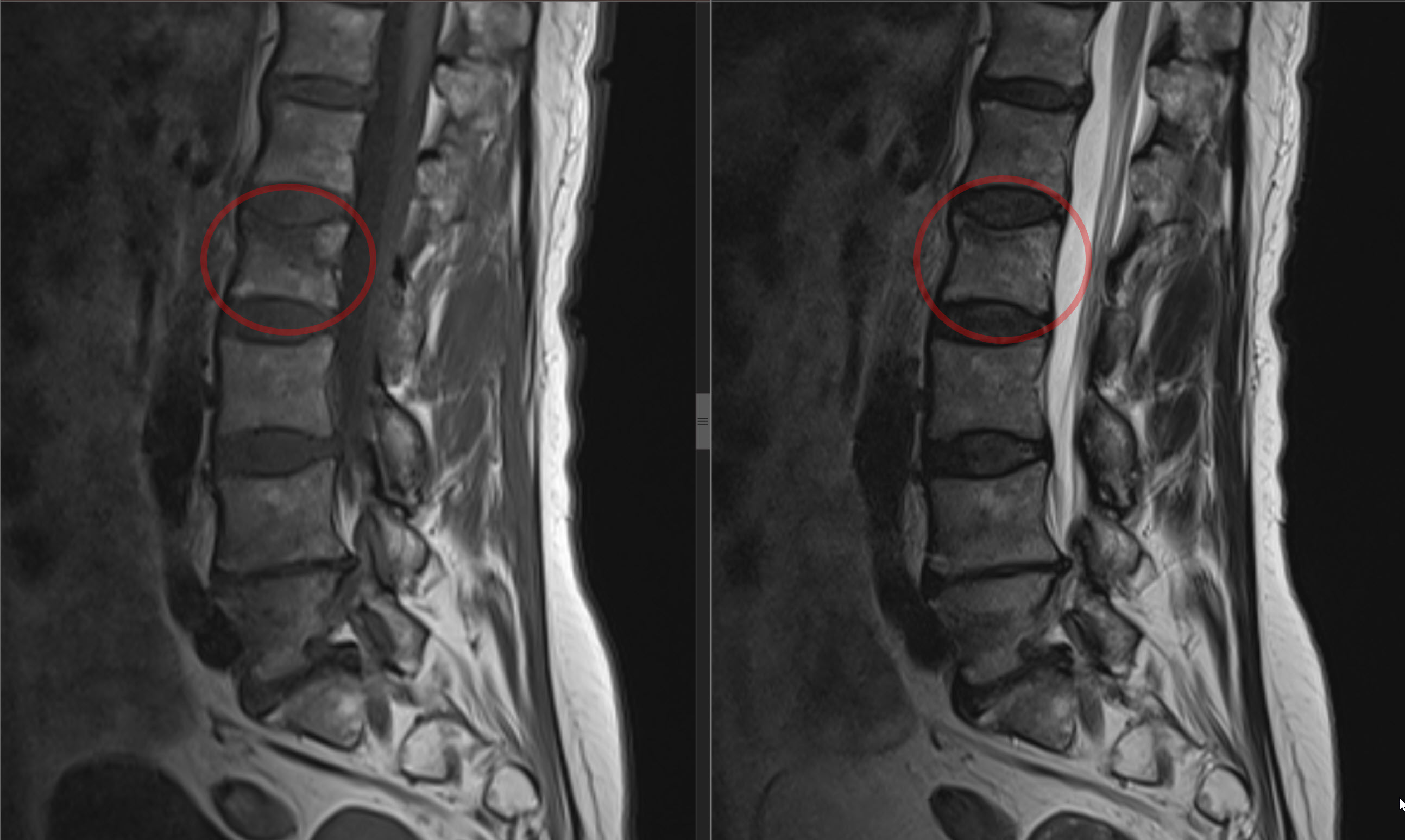
Why I chose vertebroplasty without a balloon
There was no need to restore the height of L2 in this patient. I recommended percutaneous vertebroplasty to relieve her pain on movement so that she could get up and walk sooner. I injected bone cement directly into the vertebral body without using a balloon.
How the cement was delivered
Using frontal and lateral fluoroscopic views, I advanced a needle through one pedicle and injected 5 mL of bone cement into the L2 vertebral body. The procedure took 15 minutes and was performed under propofol sedation.
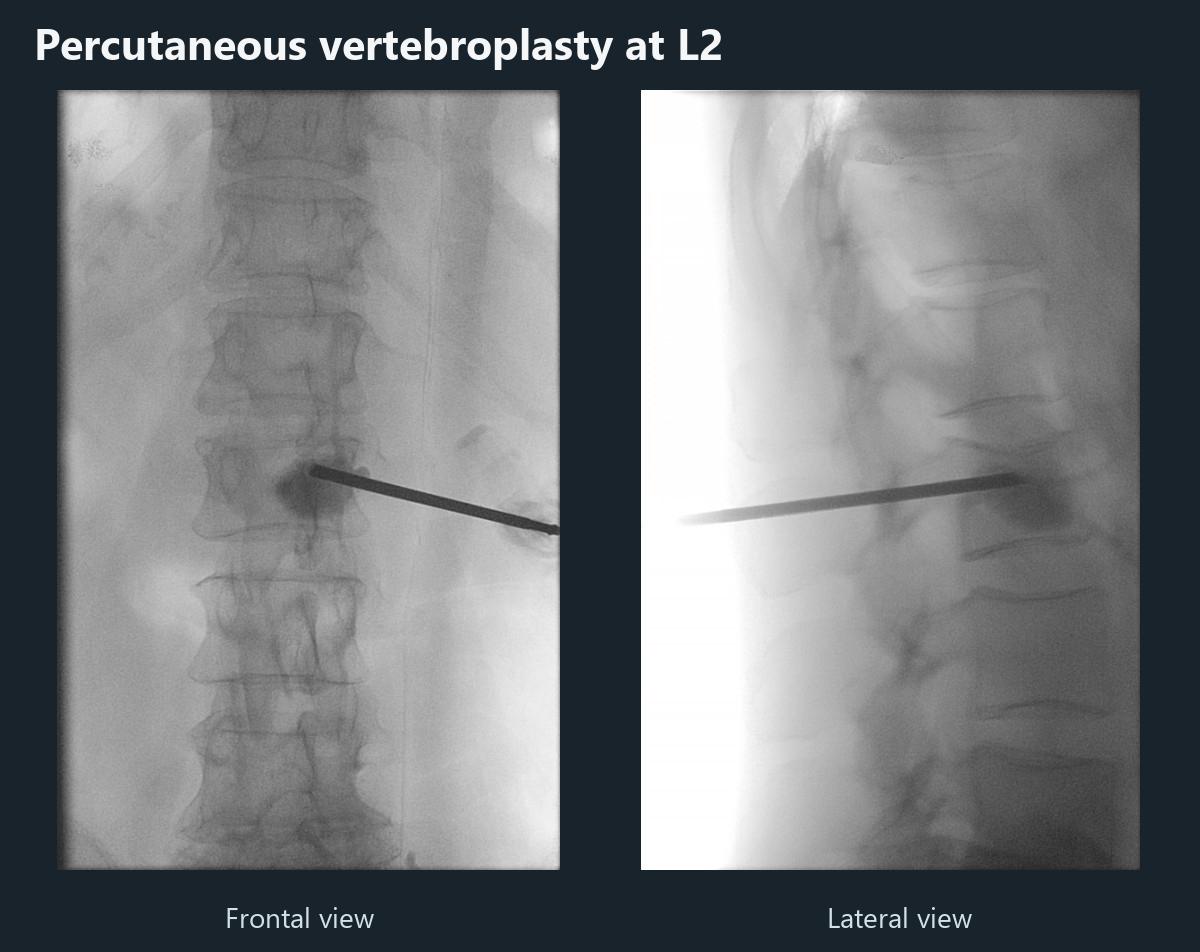
Findings on X-ray and CT
Postoperative X-rays showed the cement distribution in L2. A CT scan the following day showed that some cement had entered a blood vessel. No cement entered the spinal canal. The patient had no symptoms attributable to the vascular cement leakage. Further inpatient care with a thoracic surgery team was arranged for a separate injury to the diaphragm.
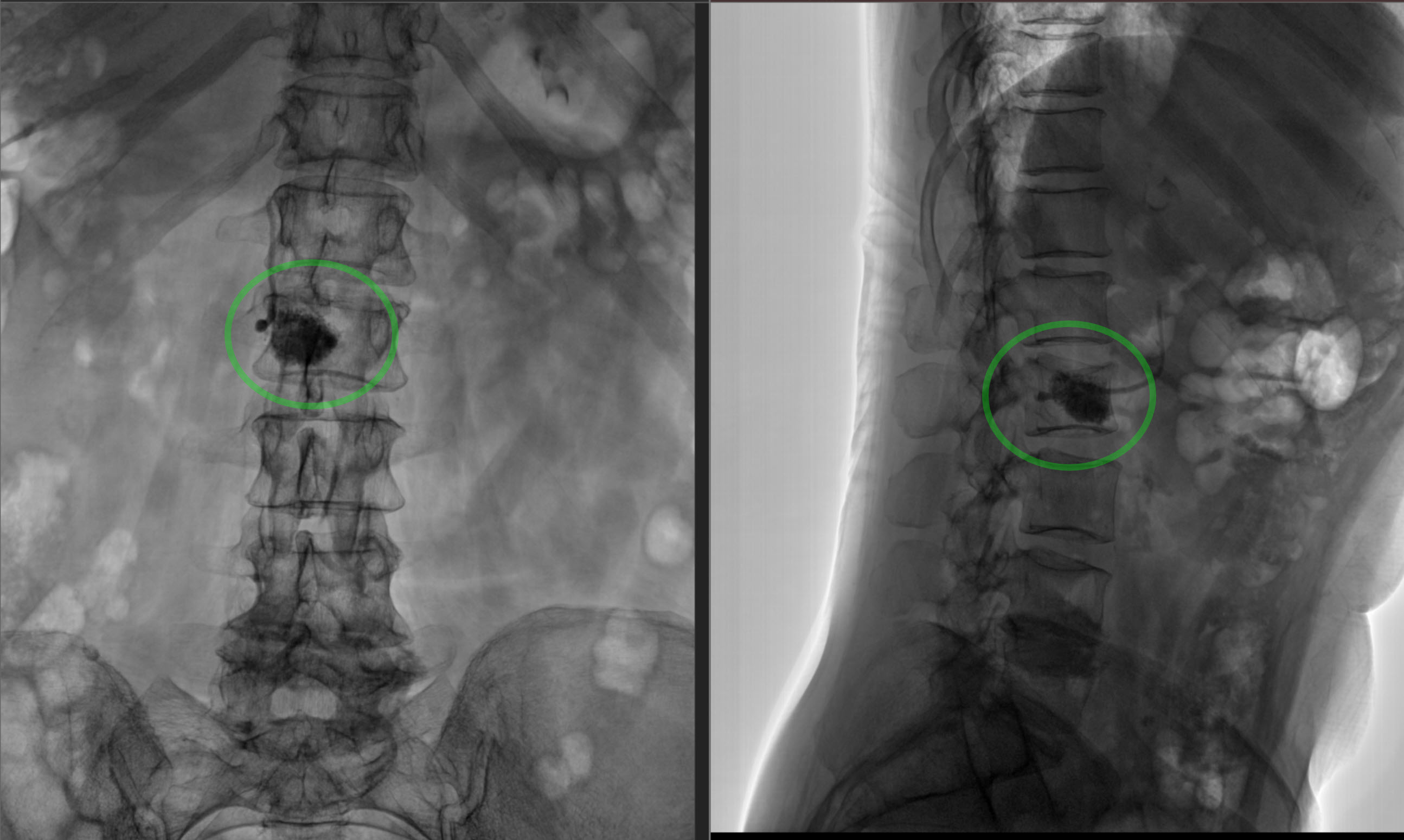
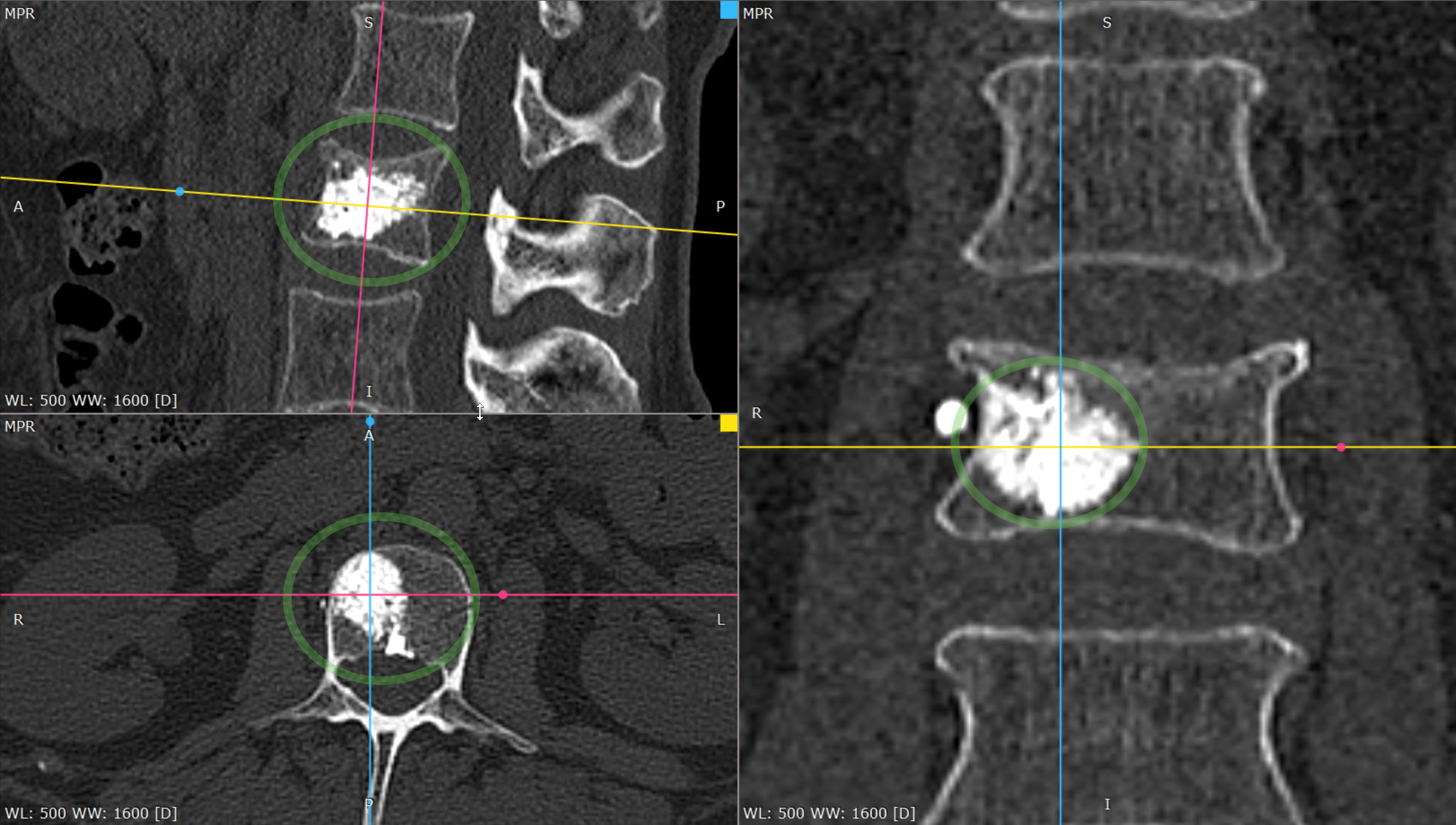
Pain and walking after the procedure
| Time | Pain and mobility |
|---|---|
| Before the procedure | She rated her lower back pain with movement at 10 out of 10. |
| One hour later | She took her first steps without assistance. |
| During the first 24 hours | Her lower back pain with movement fell to 3 out of 10. |
| At two weeks | She reported no lower back pain. |
The case description and images have been de-identified.